
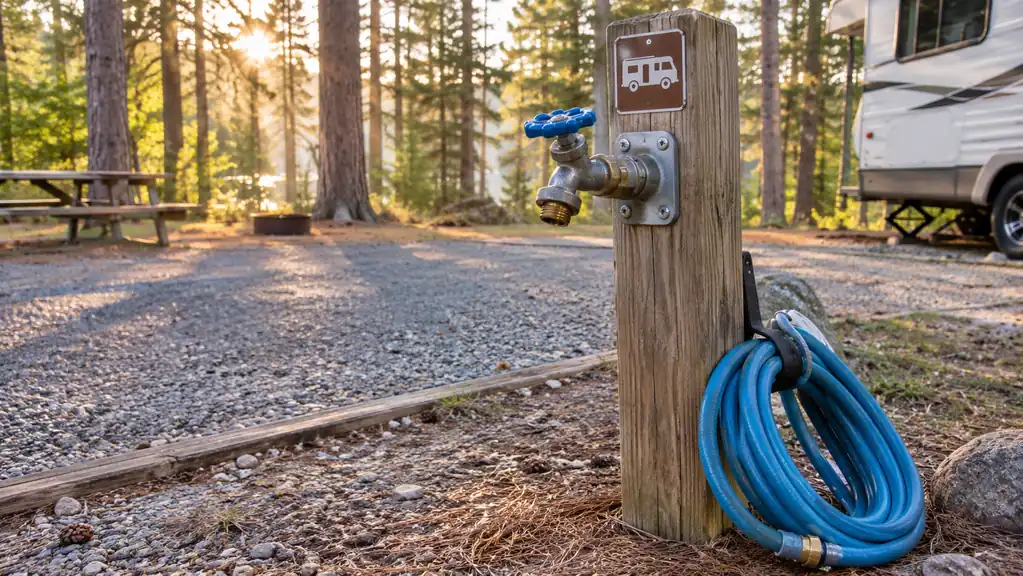
The man who sold us our used 2019 Class C motorhome handed over the keys and then said something I did not expect. He told us to get a water pressure regulator before we hooked up anywhere, because campground water pressure is not the same thing as home water pressure. We bought the Camco Brass Marine/RV Water Pressure Regulator that same week, three years ago, and it has been screwed onto a campground spigot on every trip since.
That is about six trips a year, four to ten nights each, at state parks and private RV parks across Texas, Oklahoma, Arkansas and New Mexico. Dean drives, I navigate, Biscuit sleeps on the dinette. The water bin is a lidded plastic tub that also holds a coiled drinking-water hose, a couple of spare washers, and an inline screen I rinse at the start of each season. The regulator goes in last, on top, so it is the first thing my hand finds. The first hookup after that was at a state park east of Palestine, on a spigot that was a stub of galvanized pipe sticking out of the ground by a utility post, and I remember being glad the seller had said something. Ten reasons this small part earns its place, roughly in the order they occurred to me.
The one part I would buy again before anything else in the water bin
Preset at 40 to 50 psi, drinking water safe, and it screws on by hand in about ten seconds. Ours has been on the spigot for three years.
Amazon Check Today's Price on Amazon →Campground pressure changes every time you pull in
At home the pressure is whatever the city says it is and it never changes, so you never think about it. On the road it is a different number at every pedestal. The seller warned us. A neighbor at a Texas state park said the same thing our first spring. You cannot tell by looking at a spigot, so you either trust it or you do not.
It caps pressure at 50 psi, preset at 40 to 50
The listing gives a maximum operating pressure of 50 psi and says the built-in guard is preset at 40 to 50 psi. That is the entire spec and it is the entire point. The drinking-water hose and the fittings inside the rig are the parts that take the strain, and they are also the parts that are miserable to replace on a Sunday in Arkansas.
Nothing to adjust means nothing to get wrong
Our Camco regulator is a fixed, preset unit. No gauge, no dial, no screw to turn. I know some folks want to see the number, and I understand the appeal. But a gadget with a setting is a gadget I can set wrong at seven in the morning while Dean is asking which bin the hose lives in. This one goes on and it is done being my problem.
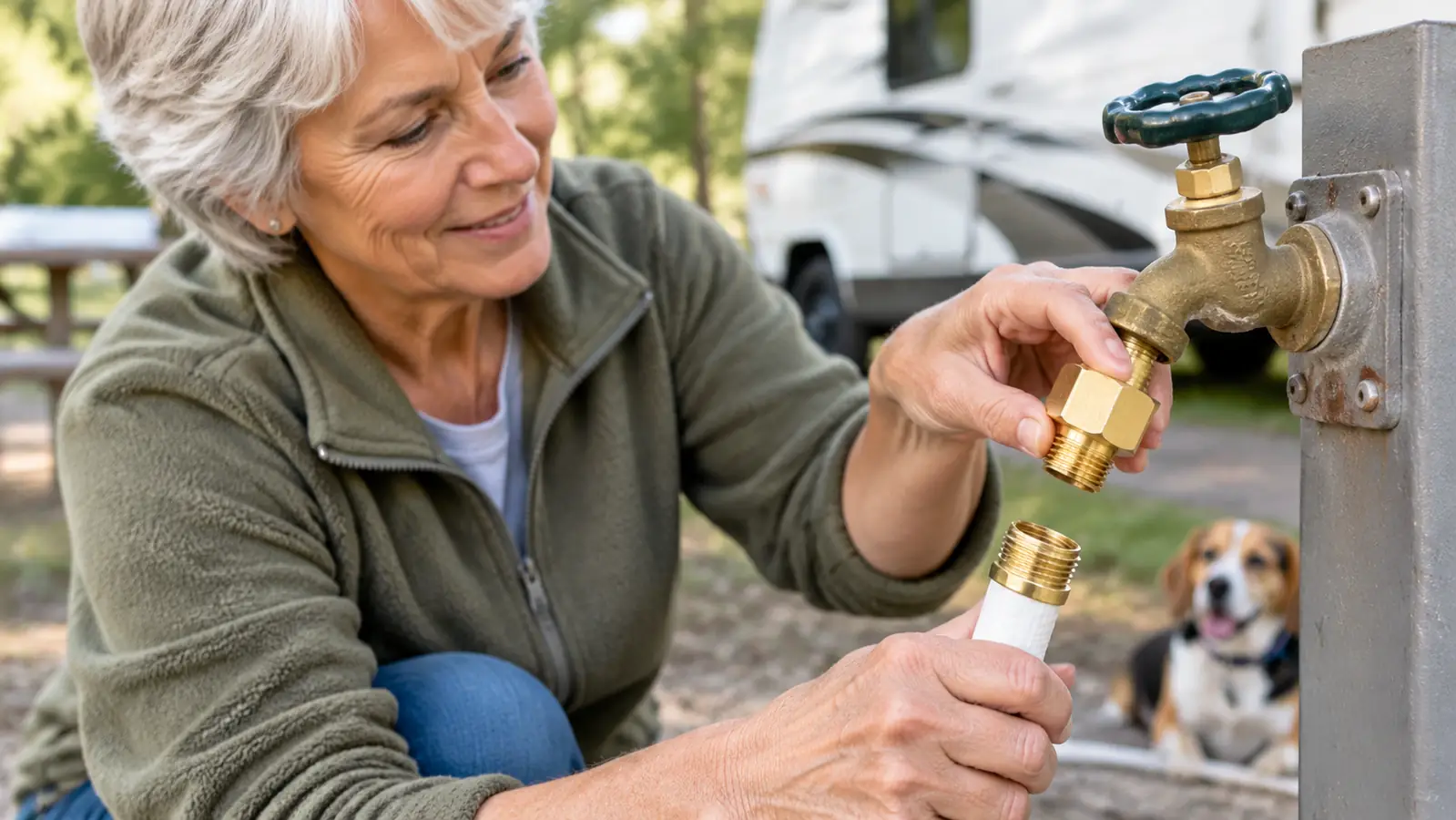
Install takes about ten seconds, no tools
It screws onto the campground spigot by hand, then the drinking-water hose screws onto it. No wrench, no tape, no instructions to squint at. I have done it in the rain and in the dark with a flashlight in my teeth and never needed a second try. Anything that survives being installed badly at dusk is built for the job it has.
Placed on the spigot, it protects the hose too
Where you put it matters more than people realize. Ours goes on the spigot, before the hose, so the hose itself never sees the full park pressure. Put it at the RV end instead and the hose takes the beating while the regulator only saves the plumbing. Same part, better placement, and it costs you nothing but the habit. A retired fellow two sites over at a park near Lake Texoma walked me through his setup in our first season and explained the order in about four sentences. Spigot, regulator, hose, rig. He said the hose is the cheapest thing in the chain and the easiest one to forget, and I have repeated those four sentences to at least two other campers since.
It is certified safe for drinking water
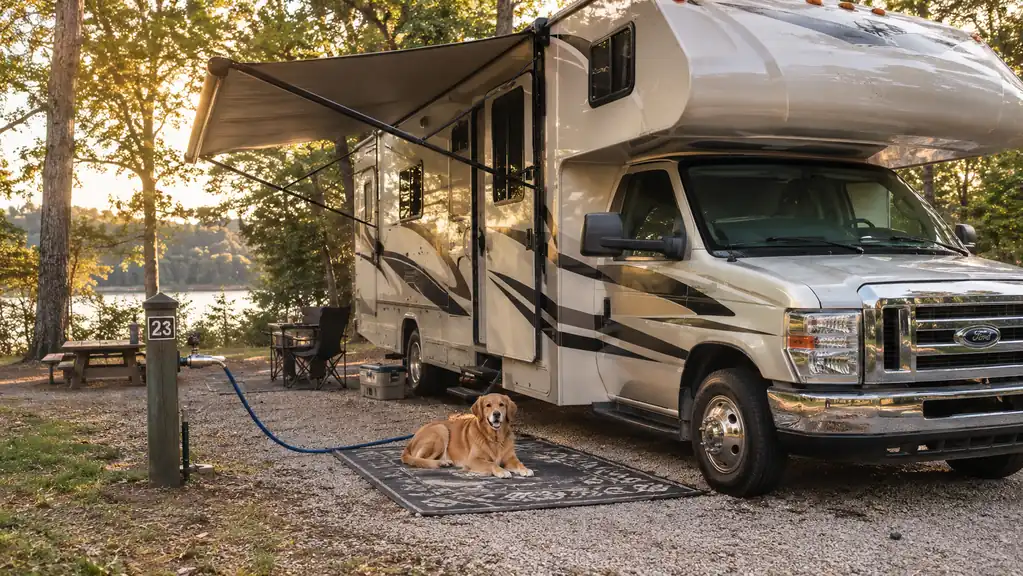
Our fresh tank and lines carry water we drink, make coffee with, and brush our teeth with. The regulator is certified to NSF/ANSI 372 and CSA lead-free content standards, which is the part I actually read before we hooked it up the first time. I am not an engineer. I just want the thing sitting between the spigot and my coffee pot to be rated for that job.
Around eighteen hookups over three years, one preset regulator, and I have not once had to think about it after the first ten seconds.
It fits the threads you actually find at campgrounds
Three-quarter inch garden hose thread is the standard at nearly every pedestal we have used, from a Texas state park to a private park outside Santa Fe. The regulator matches it on both ends. In three years and around eighteen hookups I have not needed an adapter once. That is the kind of boring compatibility you want from a part you will never think about again.
It weighs almost nothing and lives in the water bin
One and eight-tenths ounces, roughly an inch on a side. It rides in the small lidded bin with the hose fittings and the inline screen. Storage in a 25-foot Class C is a zero-sum game and every item has to earn its square inch. This one earns it in the corner of a bin I was already carrying, which is the easiest kind of yes.
Three years in, it has never given me a reason to look at it
It has been dropped on gravel, over-tightened by a helpful neighbor, rained on, and left connected through a week of New Mexico wind. It has not leaked, cracked, or stripped a thread. Camco lists a limited one-year warranty, which I have never had to test. I check it once at the start of each season. I hold it up, look through the bore, make sure the inlet screen is clear, and set it back in the bin. That is the whole maintenance routine and it takes less time than filling the fresh tank. The brass has dulled some from handling, which is normal and not something I care about. I am telling you all of this plainly, because a part that fails quietly is worse than no part at all.
It removes one decision from setup day
Setup day is a list of about fifteen things and I am not at my best during any of them. Leveling, power, sewer, the dog, the slide. Water is the one I stopped thinking about. Regulator on, hose on, done. Dean handles the electricity, I handle the water, and neither of us has to hold an opinion about pressure ever again.
What I'd Skip
Three things I would not spend on. I would skip an adjustable regulator with a gauge for the way we camp, because I would only be reading a number I cannot change anyway. I would skip anything described as a water filter, because this is not one, and the whole-RV filter question is a separate purchase and a separate decision. And I would skip worrying about how the finish looks after a few seasons, since a part that lives outdoors is not a maintenance item. If you want somewhere useful to put your attention, put it on the hose and the fittings, which take more abuse than this part ever will. Buy the plain preset regulator, put it on the spigot end, and save the rest for the things that actually break.
The part I would replace first if it ever went missing
Preset at 40 to 50 psi, 3/4 inch garden hose threads, drinking water safe, and about ten seconds of my morning. Ours has been on the spigot since the week we bought the motorhome.
Amazon Check Today's Price on Amazon →