
The man we bought the motorhome from handed Dean the keys, then stopped and said one more thing. Ask at the office what the water pressure runs before you hook up. Some of these parks will surprise you.
I nodded and mostly forgot it. I spent twenty-six years as a school office manager, and I know a throwaway warning when I hear one. Then we got the rig home and I sat down with the paperwork that came with it.
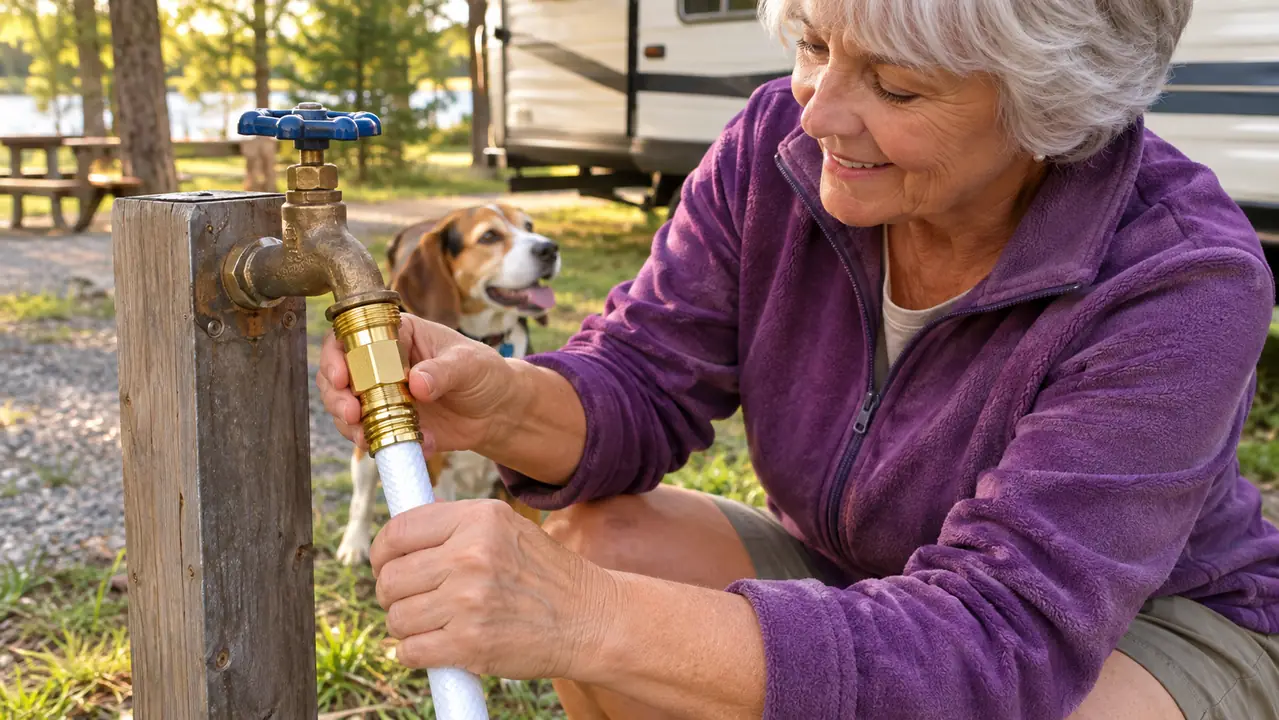
That is where I found the thing nobody had explained to us. At home, the plumbing is built for whatever the city sends. At a campground, you screw a hose onto a spigot and whatever sits behind that spigot comes straight through, into your hose, and into the rig. High pressure does not announce itself. Nothing looks different. The water just comes out fast. We ordered the Camco before our first trip, on the seller's word alone, and it has been in the bin ever since.
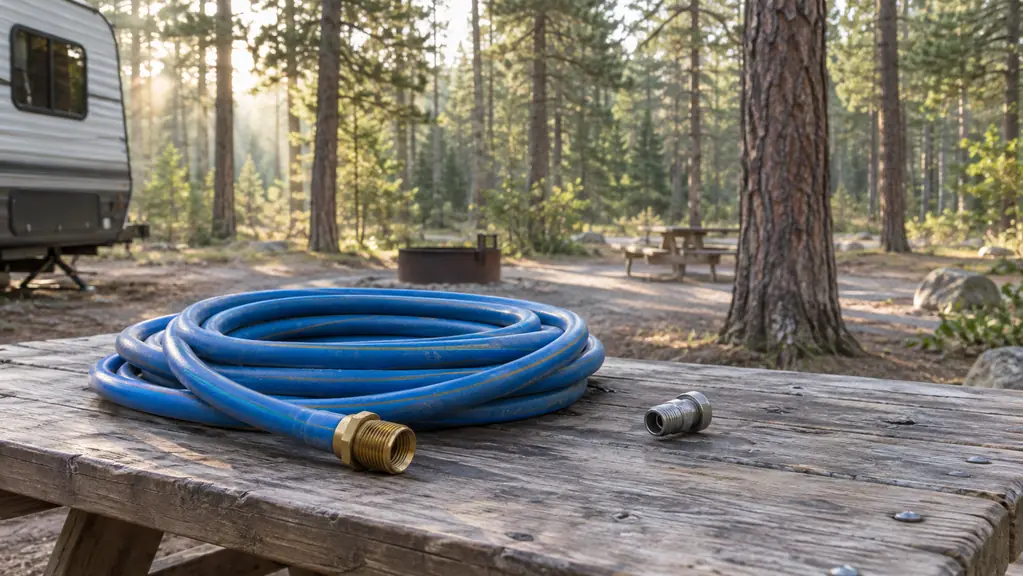
It is smaller than I expected. 1.8 ounces, about an inch in every direction, threaded at 3/4 inch to match a standard garden hose. Dean laughed when it came out of the envelope. Then he screwed it onto the spigot at our first park and stopped laughing, because it fit and it did not leak.
The routine has not changed in three years. Regulator on the spigot first, then the drinking water hose, then the rig. Two minutes, including the part where I stand there and look for drips.
I am not a gear person. I did not want a regulator with a gauge and a little dial that I would have to check and adjust and remember. I wanted the water to come out at a reasonable rate and I wanted to go sit down. That is the whole of my requirement, and I suspect it is most people's.
Nothing on it moves. That is the entire point. It is preset at 40 to 50 PSI, and in three years of campground spigots I have never once had to think about it.
The first thing that goes on the spigot, every single time
A plain Camco brass fitting, 3/4 inch garden hose thread on both ends, drinking water safe. It goes on before the hose and comes off last thing in the morning.
Amazon Check Today's Price on Amazon →What it does is narrow. It holds the water coming out of the campground spigot down to a preset 40 to 50 PSI, with a 50 PSI maximum operating pressure. That is the entire job the seller told us about. There is no gauge, no dial, no adjustment screw. A brass body, a pressure relief valve inside, and nothing for me to set wrong at six in the morning. It threads female iron pipe in and out, at 3/4 inch garden hose thread, so on a standard campground faucet it sits directly between the spigot and the hose with no adapter in the way.
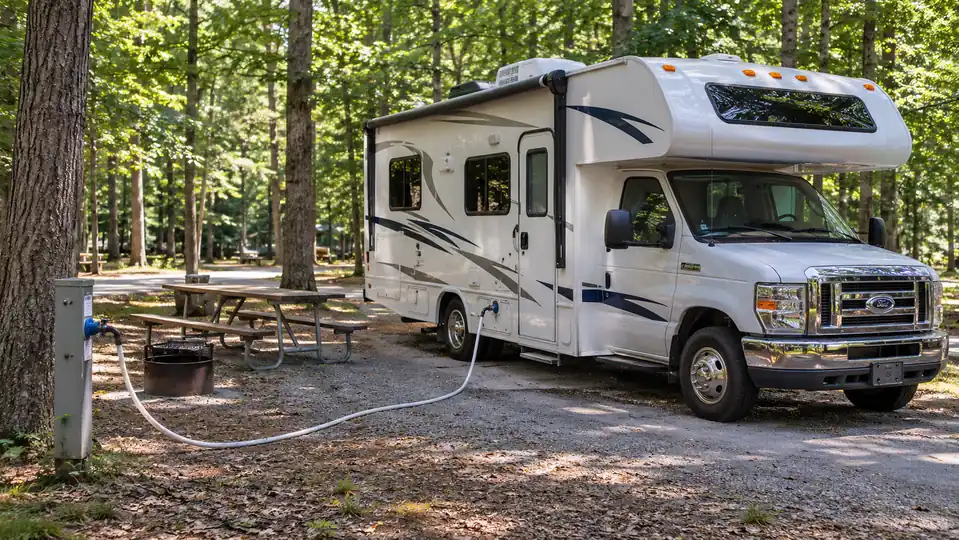
The part I did not think about until later is that this water goes into the fresh tank and comes back out of the kitchen tap. I drink it and I make coffee with it. The Camco unit is drinking water safe, certified lead-free to NSF/ANSI 372 and CSA. That is the detail I would look for first if I were buying again today. I would not have known to look for it three years ago.
What it does not do is worth saying plainly, because I have read listings that made me expect more. It does not filter anything. It does not tell you what the pressure is, because there is no gauge, so if you want the number at a given park you are guessing. It does not fix water that tastes like a well. And the warranty is limited to one year, which has not mattered, because ours has never needed it. Ours has simply sat there and done its job, trip after trip, and I have stopped noticing it.
The only real annoyance is the size. Something that weighs 1.8 ounces will vanish in an outside storage bay if you let it. Ours lives in a small canvas pouch with the hose fittings, and the pouch goes back into the same bin every time. I have watched a neighbor at an RV park spend a long, hot afternoon hunting for his, and I decided right then that ours would have a home.
What I'd Tell You If We Were Sitting at My Kitchen Table
I would tell you it is not interesting gear. Nobody stands around the fire talking about a water pressure regulator. It is an inexpensive little fitting, and I have thought about it maybe four times in three years, and every one of those times was at a spigot putting out more than I wanted going into a twenty-five foot motorhome. That is what you are buying: not a gadget, just one less thing to worry about while you are trying to eat lunch.
I would also tell you to buy it before your first trip instead of after. The week we bought the rig was the cheapest week to think about this, because the seller had just told us why and the paperwork was still on the kitchen table. Once you are six hours from home with the hose already connected, you will decide it is probably fine. It probably is. You will still be lying awake at two in the morning wondering about it, and that is a silly way to spend a vacation.
And I would tell you not to confuse it with the bigger purchases. A regulator does not replace a surge protector and it does not replace a sewer hose that is in decent shape. It is the cheapest, smallest thing on the list and the one that goes on first. Start there, then work your way up the list as the budget allows, the way we did.
Two minutes at setup, then you stop thinking about it
The Camco regulator goes on at the spigot before the drinking water hose, every hookup, same order, nothing to adjust. Ours has ridden in the storage bin for three years and about eighteen trips without a complaint.
Amazon See the Camco Regulator on Amazon →