
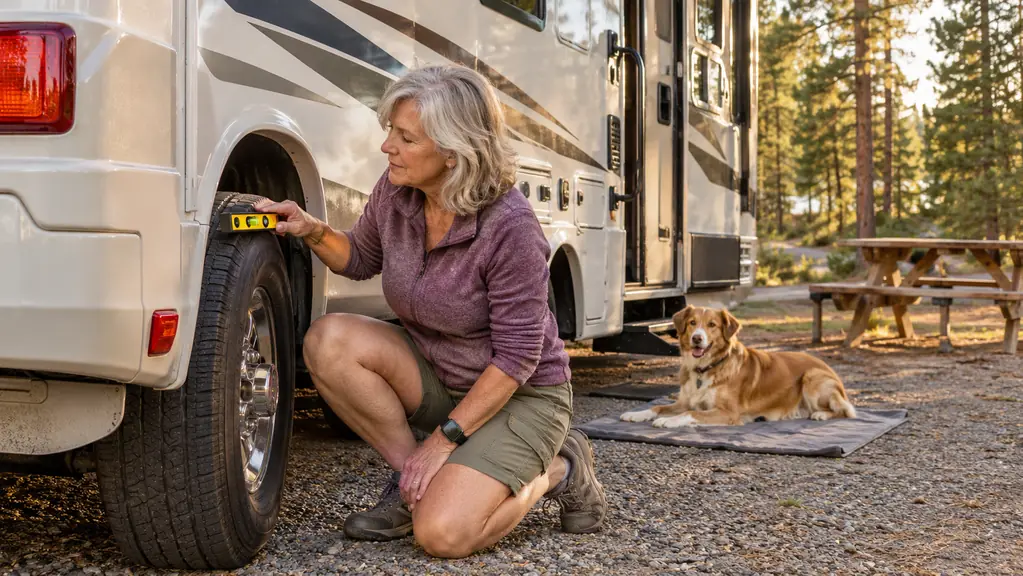
My husband Dean and I bought a used 2019 Class C motorhome about three years ago. For the whole first season, leveling it was my least favorite ten minutes of every trip. Dean would cut 2x8 boards in the driveway before we left, I would stack them under a rear tire, and then I would crouch in the gravel and squint at a bubble level while he inched the rig forward and back. The boards were heavy, they slid on wet gravel, and twice one shot out from under the tire.
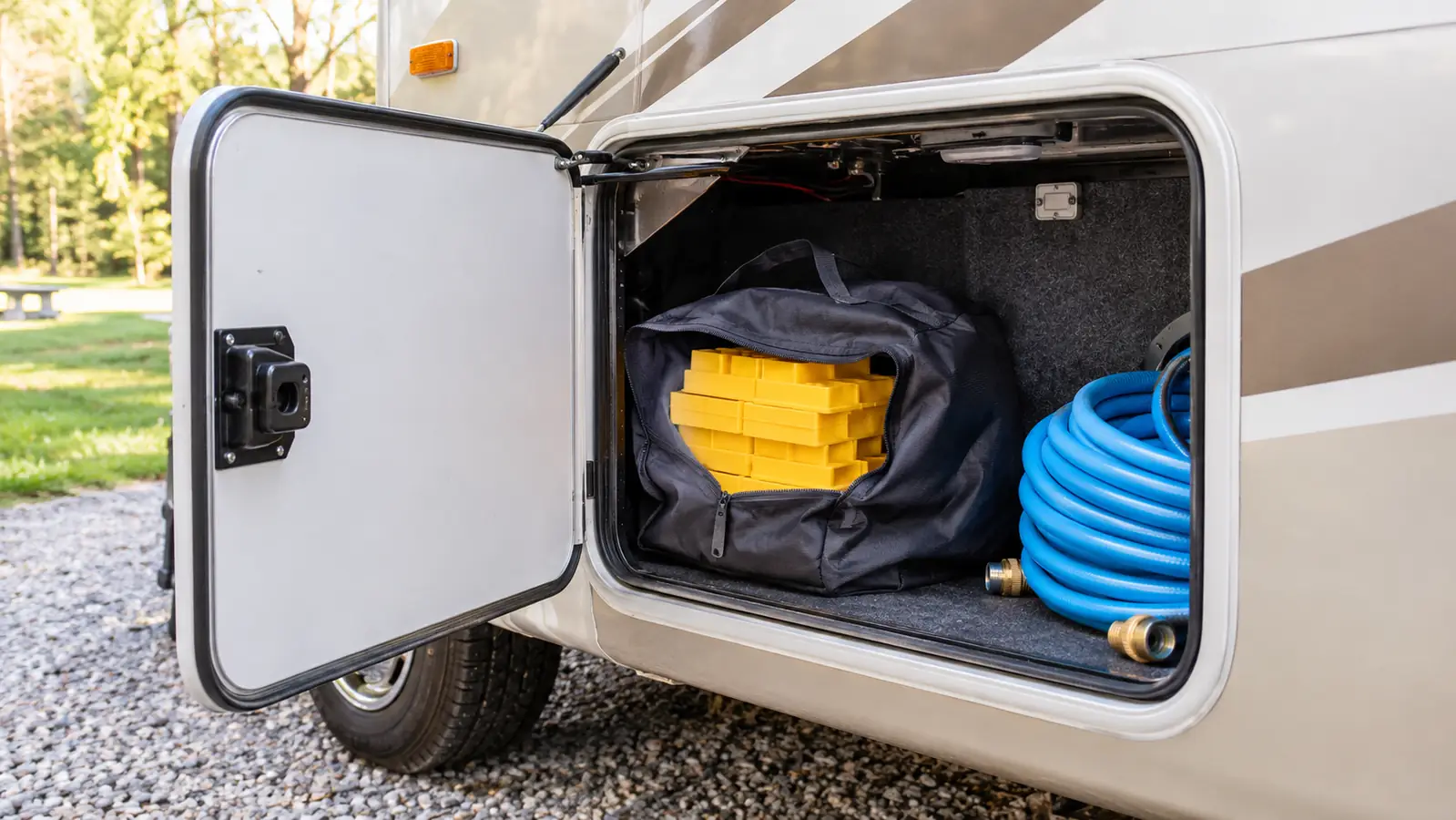
About two and a half years ago we replaced all of it with a Tri-Lynx Lynx Levelers 11 Pack. That is ten interlocking blocks, one Lynx Cap level top, and a nylon storage bag with a handle. It has lived in the outside storage bay ever since, and it comes out on every single trip. Here are the ten reasons the Tri-Lynx set made our campsite setup easier, in the order I actually noticed them.
Ten Blocks and a Bag Beat A Season of Scrap Lumber
Ten interlocking blocks, one Lynx Cap, and a storage bag that keeps them together. Two and a half years in the outside bay, and they still do the job the boards never did.
Amazon Check Today's Price on Amazon →The blocks hold on wet gravel where boards slide
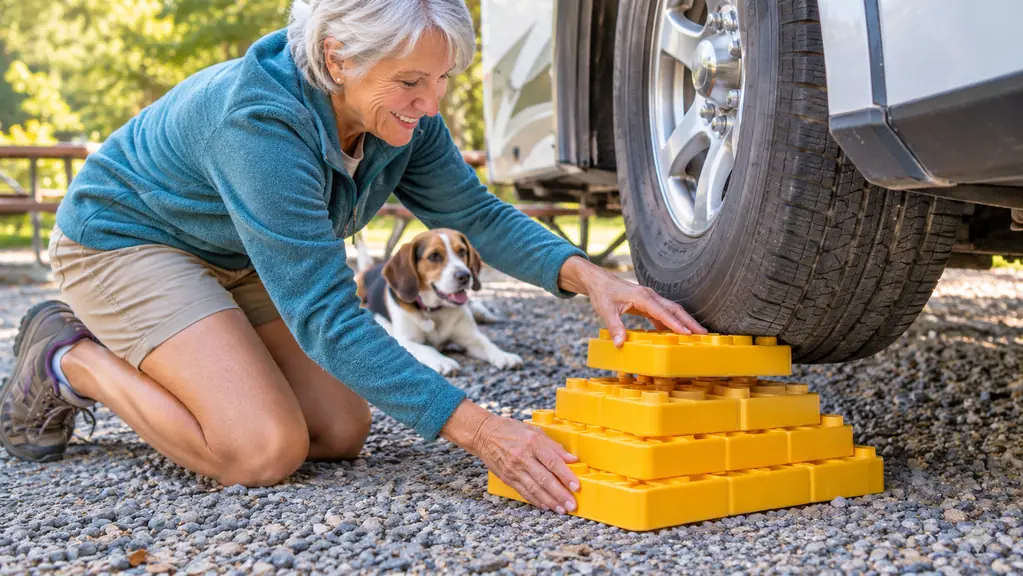
This is the one that sold me. A wet gravel pad at a state park turned those boards into sleds. The Tri-Lynx blocks interlock with each other, so when the tire rolls onto the stack, the pieces hold together as one unit instead of scattering. I hook two or three together, set them down, and the stack stays put while Dean backs over it. No chasing a board across the pad. No re-stacking after he goes an inch too far.
Each block gives you a clean one-inch step
A block stands 1.5 inches tall on its own and 1 inch when it is interlocked with the one below it. That sounds like a small thing until your pad is off by an inch and a half and your only tool is a two-by-eight, which gives you 1.5 inches of correction or nothing at all. With the blocks I add one, check the level, add another, and stop when it reads close. Small corrections instead of all or nothing.
The Lynx Cap handles the quarter-inch corrections
The 11 pack comes with one Lynx Cap. It measures 8.5 by 8.5 by 0.5 inches and adds just 0.25 inches to the top of the stack when it is interlocked. That quarter inch is the difference between a bubble sitting slightly off center and a bubble sitting right where it belongs. I set the cap on top, Dean eases forward, and we are done. Before this, the final correction was always a guess, and the guess was usually wrong.
One pack covers the low side of a 25-foot rig
Ten blocks go further than it sounds. On our motorhome the low side usually needs two blocks under one wheel and three under the other, and once in a while a fourth on a badly sloped site. Even then I have spares left in the bag. I have never wished I had bought a second pack, and I have never had to walk around and pull blocks from the other side of the rig to finish the job.
The 8.5-inch footprint sits fully under the tire
Each block is 8.5 by 8.5 inches, which puts the whole face under the tread instead of half of it hanging off into the grass. On a narrow gravel pad that matters, because a block that is half under the tire is a block that is going to crack or squirt out under the weight. I set them square, glance at both edges, and let Dean roll on. It takes one look, not a debate.
The boards slid on wet gravel and these do not. That is the whole review, honestly. Everything else is detail.
They level the picnic table, not just the RV
Our site in New Mexico had a table on enough of a slope that a coffee cup crept toward the edge. I pulled two blocks out of the bag, set them under the low legs, and the table sat flat for four nights. Same blocks, same bag. When one small kit handles the rig and the campsite furniture both, you stop carrying three separate things that each do one job badly.
The bag is why all eleven pieces come home
The nylon storage bag with its handle is the reason we still have every piece two and a half years later. The blocks go in the bag, the bag goes in the outside bay, and nothing rolls around loose in there. I have watched campers dig through a bin for a single missing block while their rig sits crooked. When we pull in, I grab one bag by the handle and everything I need is at the wheel.
Setup dropped from fifteen minutes to about three
I have timed it, because I am that person. With the boards it was ten to fifteen minutes of stacking, squinting, and pulling forward. With the blocks it is usually two to four minutes, and that includes walking back to the door to check the level. When you pull in at dusk after a long day of driving, that gap is the difference between a decent evening and a sour one.
A neighbor can learn it in one watching
Dean does the water and power hookup, so leveling is my job. When a neighbor at the campground asked how the blocks worked, I handed her two and she had them interlocked correctly before I finished explaining. There is nothing to learn. Hook them together, stack, roll on. As we get older, I like that this is not a task that only one of us can do.
Made in the USA since 1992, so replacements match
Tri-Lynx has been making these since 1992 and they are manufactured here. That matters to me for a boring reason. If I ever lose a block, I can order the same block instead of hunting for a discontinued shape that stacks with what I already own. More than nineteen thousand ratings on Amazon and a 4.8 average says other people are still buying the same thing, year after year.
What I'd Skip
Two things I would skip. First, do not buy a second pack before you have used the first. Ten blocks handles the low side of a rig like ours with room to spare, and a spare bag in the bay is weight and space you did not need to give up. Second, don't bother buying a set to use on soft sand or fresh mud; the blocks want something with a little bite under them, and a loose pad will let anything move. One more note: a neighbor at a park in Arkansas showed me a cheaper set of curved plastic ramps that had cracked across the middle after a season in the sun. The flat footprint on these Tri-Lynx blocks has held up through two and a half years of Texas and New Mexico gravel, so I would stay with what works.
If Your Rig Sits an Inch Off, This Fixes It in About Three Minutes
Ten interlocking blocks, one Lynx Cap for the fine tuning, and a handle bag that fits in the outside bay. The same Tri-Lynx pack has been in our storage compartment since our second season.
Amazon Check Today's Price on Amazon →