
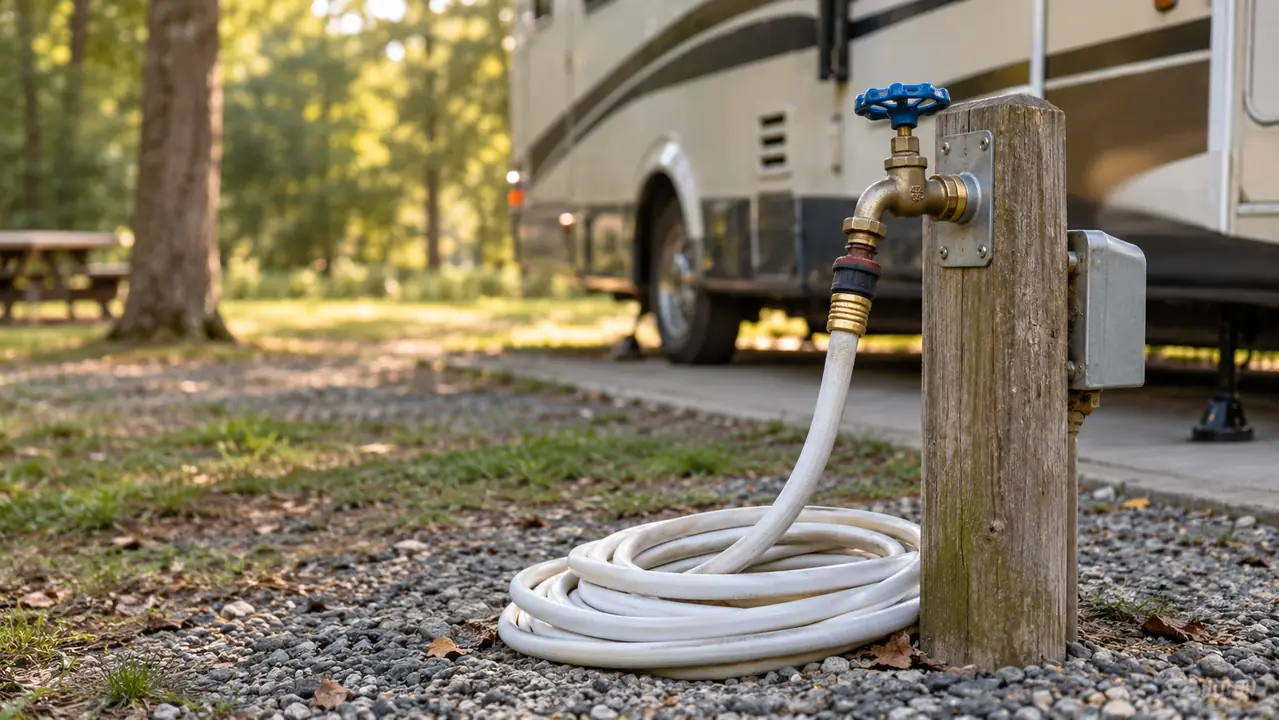
The spigot at the first campground we ever hooked up to, a private park east of Nacogdoches, would nearly knock the hose out of my hand when I turned it on. I did not know that mattered. Neither did Dean. We had owned our used 2019 Class C motorhome for exactly one afternoon, and the only piece of advice the seller gave us that stuck was this: buy a pressure regulator before you plug into anything. So we did, that same week, and the Camco Brass RV Water Pressure Regulator has been screwed onto the end of our drinking-water hose on every one of the six or so trips a year we have taken since.
Nobody explains this part to a new RVer. Campground water pressure is not standardized and it is not gentle. A municipal system feeding a park can push well past what the fittings under your sink are built to handle, and the park has no reason to mention the number. You find out by watching a connection weep onto the gravel, or by hearing something let go in the wet bay at two in the morning. The plumbing in a Class C is a chain of plastic elbows, a water heater connection, a toilet valve and a shower fitting, and forty to fifty pounds per square inch is comfortable for all of it. Ninety is not. That is the entire job of this small part, and it is the smallest thing in our whole setup.
One Small Part Between a Campground Spigot and the Fittings Under Your Sink
The Camco regulator is preset at 40 to 50 PSI, so there is no gauge to read and nothing to adjust. It threads onto a standard 3/4 inch garden hose spigot, weighs 1.8 ounces, and is certified drinking water safe to NSF/ANSI 372.
Amazon Check Today's Price on Amazon →Step 1: Find Out What the Campground Is Actually Handing You
You can ask the office what the pressure runs. Sometimes they know. More often you get a shrug and a story about the last camper who asked. Texas state parks have been reasonable in our experience, at least the ones we keep going back to. Private parks are all over the map, and the ones with a laundry building and a hundred sites seem to be the ones where the water comes in hard. There is no sign at the post and no gauge to read.
The honest answer is that you cannot count on knowing. I stopped trying. The Camco is a fixed, preset regulator, capped at 40 to 50 PSI with a maximum operating pressure of 50 PSI. There is no dial and no gauge, nothing to read and nothing to adjust at seven in the morning with a flashlight in my teeth. It makes the decision for me, which is what I want before coffee. I know there are adjustable regulators with gauges on the market. I have never wanted one. A gauge is one more thing to misread, and an adjustment is one more thing for Dean and me to disagree about while somebody waits behind us at the post.
Pressure is not constant either. It drops when the park fills up and climbs at midday when everybody is out on a hike. You can hook up at a perfectly calm two in the afternoon and wake up to a different system at six, when forty showers turn on at once. A preset regulator does not care about any of that. It caps what it sees, whatever the hour, and goes back to being a 1.8 ounce piece of hardware.
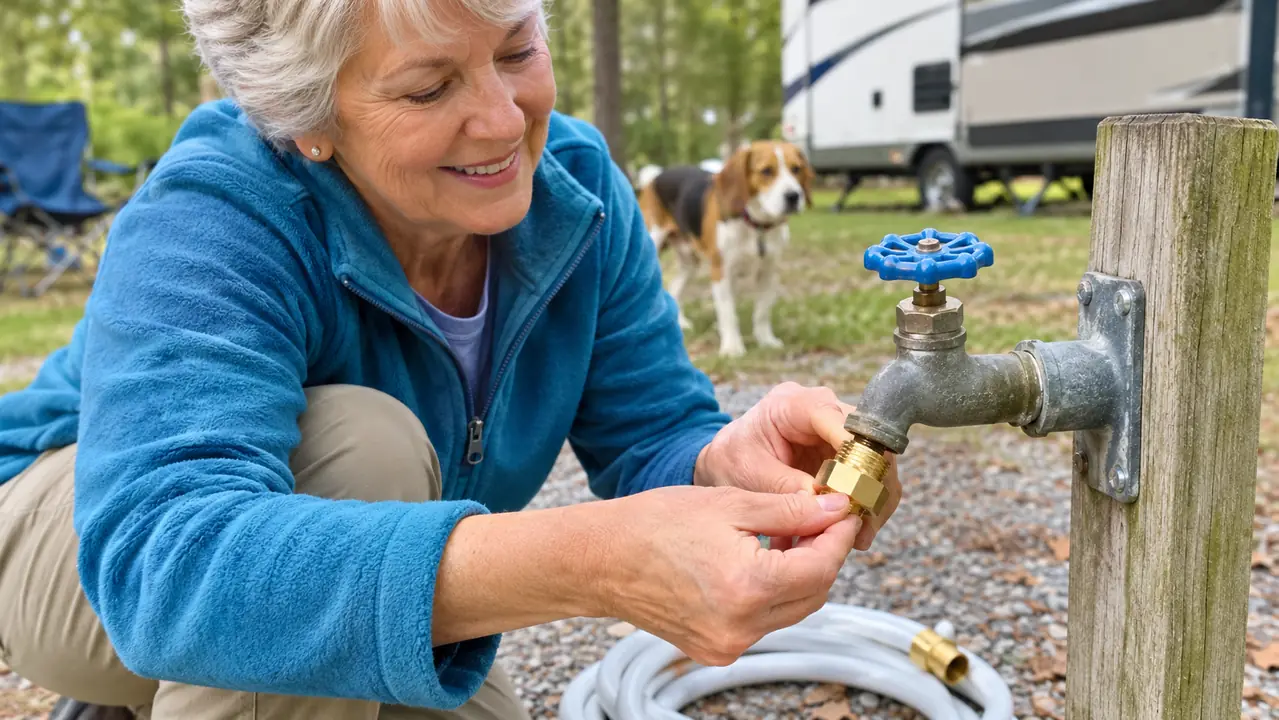
Step 2: Screw the Regulator Onto the Spigot First
Order matters here, and this is where I see people get it wrong. The lineup is campground spigot, then regulator, then drinking-water hose, then the RV inlet. The regulator goes first, directly on the spigot, because everything downstream of it is protected and everything upstream belongs to the park. Put it at the RV end of the hose and the hose itself still takes the full pressure. A hose that lets go under a picnic table is a better mess than one that lets go inside a wet bay, but it is still a mess you have to clean up in your good shoes.
The inlet is a standard 3/4 inch female garden hose thread, so it spins on by hand. Hand is the correct amount of tight. I have watched a man put pliers on one of these and chew the threads, and then it dripped for the rest of the season and he blamed the regulator. It weighs 1.8 ounces, so it does not hang off a spigot and drag anything down. Ours has been on and off a post somewhere around eighteen times and the threads are still clean.
Step 3: Connect the Hose to the Regulator, Then Open the Spigot Slowly
The outlet side is the same 3/4 inch garden hose thread, so our white drinking-water hose threads straight onto it. Ours stays attached to the regulator in storage, which saves one connection and one chance to cross a thread at every setup. Once both joints are hand tight, crack the spigot a quarter turn and let the line fill before you open it the rest of the way. Slamming a dry hose full of water at full pressure is how you make a fitting complain, and there is no reason to do it that way when the slow version costs you fifteen seconds.
One thing worth knowing is on the package. This regulator is drinking water safe, certified lead-free to NSF/ANSI 372 and CSA. That reads like fine print until you remember what the hose is actually for. Biscuit drinks out of the same supply we do, and I fill the kettle from it. I do not want a fitting of unknown origin sitting between the spigot and my coffee. That certification is half the reason we bought this one instead of whatever was hanging on a peg at the campground store.
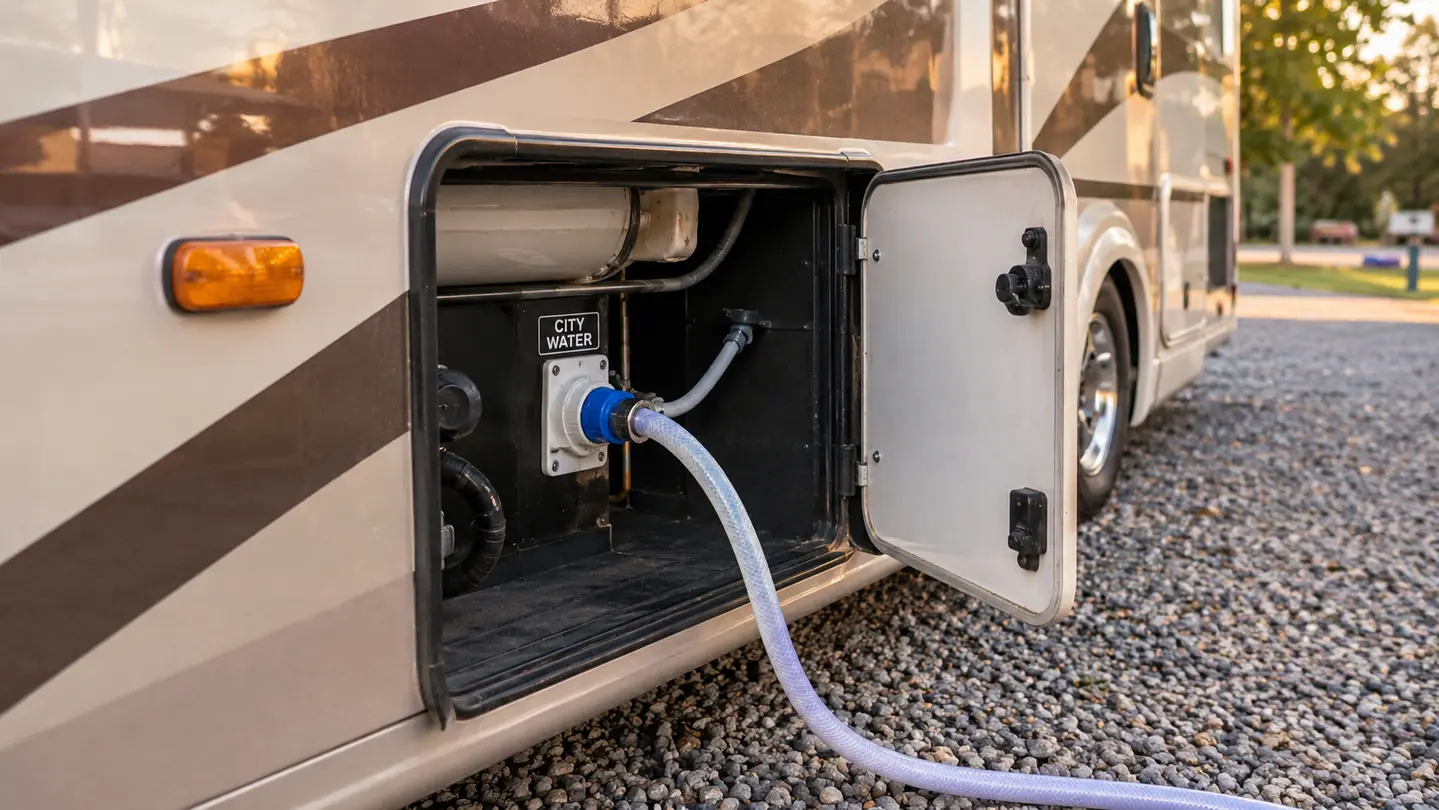
Step 4: Check Every Joint for Drips Before You Go Inside
There are three joints to check: spigot to regulator, regulator to hose, hose to the RV inlet. I run a finger around each one after the water has been on for a minute. If a joint weeps, shut the spigot off, break the connection, reseat it, and snug it by hand again. Do not go get the pliers. Almost every time it is a thread that started crooked, not a part that failed.
In three years and something like eighteen hookups we have never had a burst pipe or a leak in the motorhome. I do not think that makes us lucky. I think it makes us boring, which is what I want out of plumbing. The check takes ninety seconds, and it is the difference between finding a drip at four in the afternoon and finding it at two in the morning with a wet sock.
If you ever do arrive without the regulator, do not hook up to city water and hope. Ask the office what the pressure runs and take them at their word only if they actually give you a number. When nobody will, we run off our fresh tank and the water pump for the night. It costs us a little water and a little battery and nothing else.
Step 5: Take It Off Last and Keep It With the Hose
Breaking camp is the same list in reverse. Shut the spigot, disconnect the hose from the RV first, then the hose from the regulator, then the regulator from the spigot. Pull the regulator off first with the line still under pressure and you get a face full of water and a wet shirt for the drive home.
Here is the part that actually matters. This is a 1.8 ounce part about an inch in each direction, and it is the easiest thing in the world to leave sitting on a campground post. We solved that by keeping the Camco threaded onto the end of the drinking-water hose, and the hose lives in the same bin in the outside storage bay every single time. If it is attached to the hose, it comes home when the hose comes home. That is the entire system, and it has worked for three years.
What Else Helps
The regulator does exactly one job. It does not filter sediment, it does not soften anything, and it does not tell you what the pressure was. If you want better tasting water you need a filter, and we have never owned a whole-RV system, so I will not pretend to review one. A regulator and a filter are two different purchases and neither does the other's work.
The other thing we do at every hookup is plug the Progressive Industries SSP-30XL surge protector into the pedestal before the RV cord goes in. We have had exactly one incident with it, in our second year at a private park in Arkansas, when its indicator showed a wiring fault at the pedestal. We asked the office for a different site and the new pedestal read fine. Nothing in the motorhome was ever damaged. Water and power are the two things a campground hands you that you cannot see, and we check both before we settle in.
The Camco is preset at 40 to 50 PSI with no gauge and no dial. There is nothing on it I can get wrong at seven in the morning in the rain, and that is why it has stayed on our hose for three years.
A neighbor at a park in New Mexico once told me he had replaced the outside shower fitting on his rig twice before he finally bought a regulator. I have no way to verify his story and I am not repeating it as gospel. But it matches what the seller told us, and it matches what the plumbing looks like under our own sink, which is a lot of plastic doing a job it was not designed to do at ninety pounds.
Do not skip the boring part of the routine either. We are on 30-amp hookups almost everywhere we go, and the water side of our setup is now the fastest piece of an arrival. Regulator on, hose on, spigot open, finger around three joints, done. Getting level and setting up the dog pen takes twenty minutes. The plumbing takes two, and it is the part I worry about least, which is exactly the point.
Cap the Pressure Before It Finds the Weakest Fitting in Your Rig
Preset at 40 to 50 PSI, drinking water safe, and threaded for a standard 3/4 inch garden hose spigot. Ours has gone on every trip since the week we bought the motorhome.
Amazon Check Today's Price on Amazon →