

Before we bought our used 2019 Class C motorhome, I thought an RV surge protector was a fancy power strip. Then the seller handed us the keys and told us to protect the coach. That was three years ago. We bought the Progressive Industries SSP-30XL before our first trip, and it has been plugged into the campground pedestal at every hookup since. I am Marla Pruitt. Dean and I travel about six times a year, mostly on 30 amp sites in Texas, Oklahoma, Arkansas and New Mexico, with our 7-year-old beagle mix, Biscuit, riding along. The question I hear from other couples is simple: would a hardwired RV electrical management system have been the smarter buy? My short answer is no, not for us. But I can see why it is yes for some owners.
I have not owned a hardwired EMS. I have read the listings, looked at units in other people's rigs and asked questions at campgrounds. What I know about the Progressive Industries SSP-30XL comes from three years of using it at real pedestals, not from a bench test. That is the comparison I am making here: the portable unit we own against the hardwired type we considered and skipped.
| Progressive Industries SSP-30XL | Hardwired RV EMS | |
|---|---|---|
| Installation | None. Plug it into the pedestal and plug the RV cord into it. | Requires mounting inside the RV and wiring into the coach power path. |
| Setup at each hookup | One extra connection at the pedestal, then check the LED indicators. | Nothing to set up at the pedestal because it stays installed in the coach. |
| Theft risk | Visible and portable, so it can walk off. The locking bracket helps but does not make it permanent. | Hidden inside the RV, so it is not sitting out for someone to take. |
| Weather exposure | Built with an all-weather shield and thermal protection for outdoor use at the pedestal. | Lives inside the RV, out of rain and sun. |
| Checking the pedestal before connecting | You see the LED indicators before the RV is connected. | The unit is inside the coach, so the pedestal check is less direct. |
| Portability between RVs | Moves to a new RV or a friend's rig in seconds. | Stays with the coach and is not practical to move. |
| Transfer to a new coach | Unplug it and take it with you. | Usually stays with the coach or requires removal and reinstallation. |
| One less thing to remember | You have to pack it, plug it in, and remember it at every stop. | Installed once, then it is part of the coach. |
| Best for | Renters, couples who trade RVs, and anyone who wants a visual check at the pedestal. | Owners who keep the same coach and want a permanent install. |
| Electrical work required | None. | Yes, installation by someone comfortable with RV wiring. |
Where the Progressive Industries SSP-30XL Wins
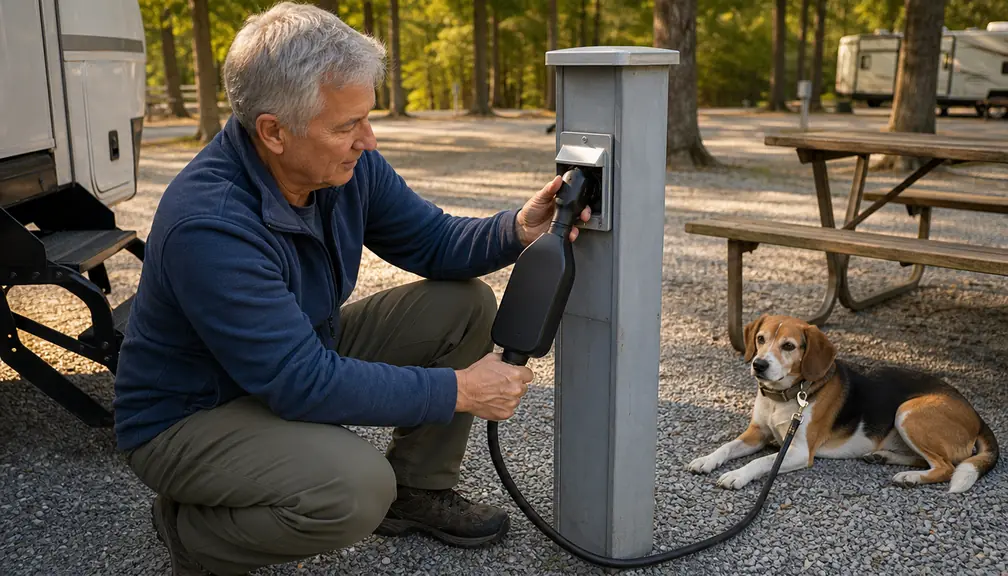
The first win is the one that matters most to a couple who hooks up and unhooks at every stop: you can see what the pedestal is doing before the coach is connected. The Progressive Industries SSP-30XL is a portable 30 amp, 120 volt unit with a 3,600 watt capacity and 825 joules of surge protection. It has LED indicators, an all-weather shield, thermal protection and a locking bracket. I plug it into the pedestal, read the lights, and only then do I plug the RV cord into it. That order is the whole point. If the lights tell me something is wrong, the coach never touches that power.
The second win is flexibility. We have one RV, but we are not permanent at one site. The unit is about 2 pounds and 14 inches long, so it lives in the outside storage bay and comes out at every stop. If we ever trade coaches, it goes with us. If a neighbor at the park has a 30 amp rig and a question, I can show them the unit in my hand. A hardwired system is built into the coach. That is fine until you change coaches or want a second opinion at the pedestal. The Progressive Industries SSP-30XL also needs no wiring labor. There is no cutting into the coach electrical path, no mounting inside a bay and no electrician appointment before the first trip.
Where the Hardwired RV EMS Wins
A hardwired unit wins on set-and-forget protection. It is installed inside the coach and stays there. You do not pack it, plug it in, check the lights and remember to unplug it before you drive away. For a couple who keeps the same motorhome for a decade, that is a real advantage. There is no extra connection at the pedestal, and there is no portable box sitting outside for someone to notice. The protection is simply part of the coach power path.
A hardwired unit also wins on theft risk and weather exposure. Our SSP-30XL sits at the pedestal. The locking bracket helps, and the all-weather shield is made for outdoor use, but the unit is still outside and still portable. A hardwired system is out of the rain, out of the sun and out of sight. That matters at a park where you leave the coach for the day. It also means one less thing to set up in the rain when you arrive after dark.
Put the Progressive Industries SSP-30XL at Your Next Pedestal
The portable 30 amp unit we have used for three years, with LED indicators, an all-weather shield and a locking bracket. Check the pedestal before the coach is connected.
Amazon See the SSP-30XL on Amazon →What the SSP-30XL Actually Does at the Pedestal
At a 30 amp site, I set the unit on the pedestal, plug it in, and watch the LED indicators. The lights are the part I use most. They tell me the pedestal is wired the way it should be before I connect the coach. On a normal arrival, the check takes less time than running out the slide. On the one bad arrival, it took longer and saved us a move.
The unit is rated for 120 volts and 3,600 watts, with 825 joules of surge protection. It has thermal protection and a Lexan housing, plus the all-weather shield assembly and cover. I am not an electrician, so I will not pretend to explain the inside. What I can tell you is that the housing has stayed intact through Texas heat, Arkansas rain and New Mexico dust. The locking bracket gives me a way to secure it at the pedestal. It is not a permanent lock, but it is better than nothing.
The lights are the part I use most. They tell me the pedestal is wired the way it should be before I connect the coach.
The Progressive Industries SSP-30XL is portable, and that is the whole design. It is not mounted in the coach. You plug it in, read the lights, and connect the RV. That simplicity is why I still use it. I do not have to think about a menu or a setting. I do not have to remember a code. I just look at the lights.
What a Hardwired RV EMS Changes About Your Setup
If we had gone hardwired, the biggest change would be where the protection lives. The unit would be inside the coach, wired into the power path, and I would not carry it out to the pedestal. That sounds small until you have done the portable routine in a downpour. A hardwired system is already there. You plug the coach into the pedestal and go inside. The protection does its job without you handling it.
The tradeoff is that you lose the portable check. I would not have a box in my hand at the pedestal with lights I can read before the coach is connected. I would be relying on the installed unit and whatever display it has. For some owners, that is fine. They want the system out of sight and out of mind. For us, the hands-on check is the reason we bought the portable unit in the first place. Different couples want different things from the same hookup.
The Small Annoyances I Have Learned to Live With
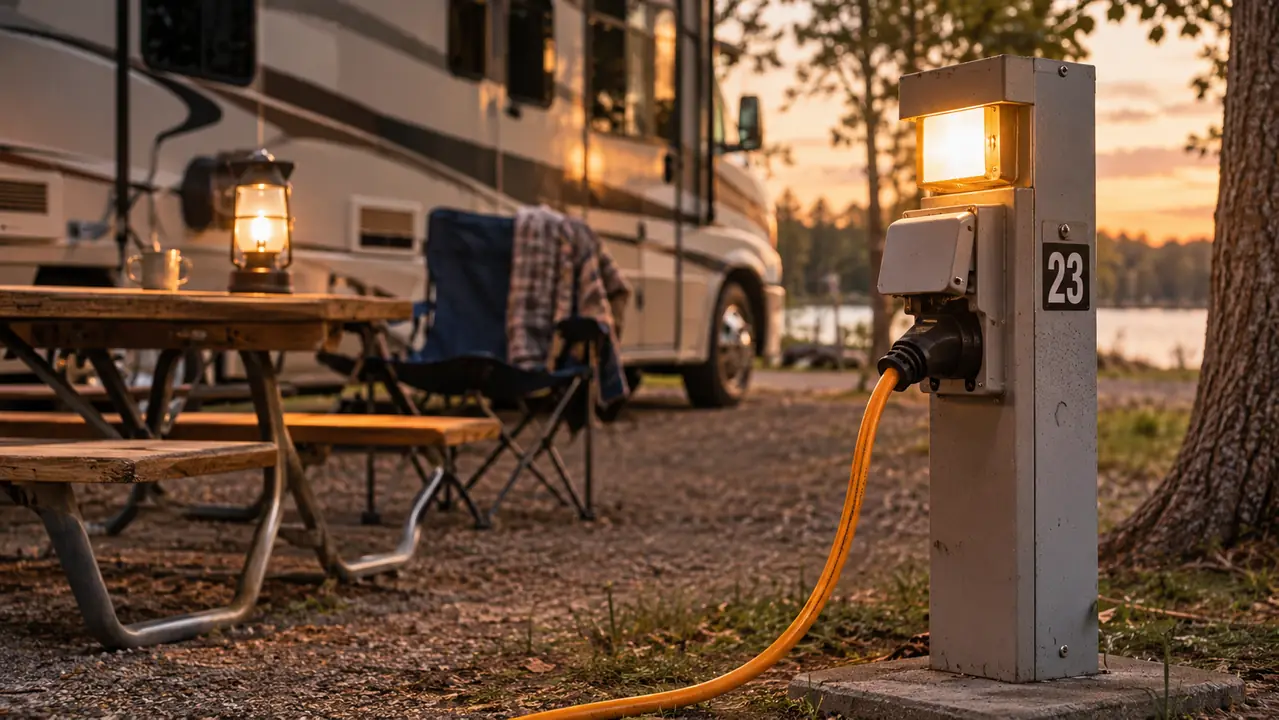
The portable unit has two annoyances I will not pretend away. The first is that it is one more thing to do. At every arrival, I open the storage bay, take out the SSP-30XL, plug it into the pedestal, check the lights, then plug the RV cord into it. At departure, I reverse it. That is not hard, but it is a routine. If you are tired, wet or arriving after dark, a hardwired system would be easier.
The second is that the unit stays outside. The all-weather shield and Lexan housing are made for that, and ours has held up. But I still notice it sitting there when we leave for the day. The locking bracket gives me some peace of mind. It is not a guarantee. If that bothers you, a hardwired unit solves it by being inside the coach. I would rather have the pedestal check, so I live with the annoyance.
What I Would Tell a Friend at the Next Site
If a friend pulled in beside us and asked whether to buy the portable unit or go hardwired, I would ask three questions. Do you keep the same coach? Do you want to check the pedestal with your own eyes before you connect? Do you have someone who can wire a hardwired unit correctly? If the answers are yes, yes and no, I would hand them the Progressive Industries SSP-30XL and tell them to start there. It is the simpler first step, and it has worked for us for three years.
If the answers are yes, no and yes, I would tell them to look hard at a hardwired system. They will not have to carry a box or remember it at every stop. They will not have to worry about it sitting at the pedestal while they are away. That is a good trade for the right owner. The mistake is buying one without the other. A portable unit without a pedestal check is just a box. A hardwired unit without a correct install is just a project. Match the tool to the way you travel.
One more thing. Neither unit replaces the other kind of protection. They are both electrical management tools. The question is not which one is tougher. The question is where you want the protection to live and how much you want to handle it at the pedestal. Once I answered that for us, the choice was easy.
The One Time It Mattered
In our second year, at a private RV park in Arkansas, the SSP-30XL indicator showed a wiring fault at the pedestal. I had just backed Dean into the site. Biscuit was inside, waiting for her water bowl. I read the lights, walked to the office and asked for a different site. The new pedestal read fine. We moved, plugged in and stayed three nights. Nothing in the coach was damaged. That is the entire story. It is not dramatic, and I am glad.
That is also why I push back when someone says a portable unit is only for beginners. A hardwired unit might have caught the same fault, but I would not have seen it at the pedestal before connecting. I would have plugged the coach in, walked inside and found out later. For us, the check at the pedestal is the feature. It is the reason the portable unit stays in the storage bay.
Who Should Buy Which
Buy the Progressive Industries SSP-30XL if you are like us: one coach, a few trips a year, 30 amp hookups, and no interest in cutting into the RV wiring. It fits a couple who wants to check the pedestal before the coach is connected and who does not mind one extra connection. It also fits anyone who rents an RV or may trade coaches, because the unit moves with you. If you are new to RVing, this is the easier first step.
Buy a hardwired RV EMS if you keep the same coach for years, want the protection installed and out of sight, and have someone who can do the wiring correctly. It is the better fit for a full-timer or a couple who leaves the coach at a park for long stretches and does not want a portable box at the pedestal. It is also the better fit if you know you will not want to set up one more thing in the rain. Neither choice is wrong. The right one depends on how you travel.
The Portable Unit That Has Been at Every Hookup for Three Years
The Progressive Industries SSP-30XL is the 30 amp surge protector we use on our 2019 Class C. LED indicators, all-weather shield, locking bracket. No wiring job required.
Amazon See the SSP-30XL on Amazon →